
Is It Legal to Download TikTok Videos? Copyright Explained Simply
Who owns a TikTok video, what you can do with your own and other people's videos, and where the copyright lines are, in plain English.
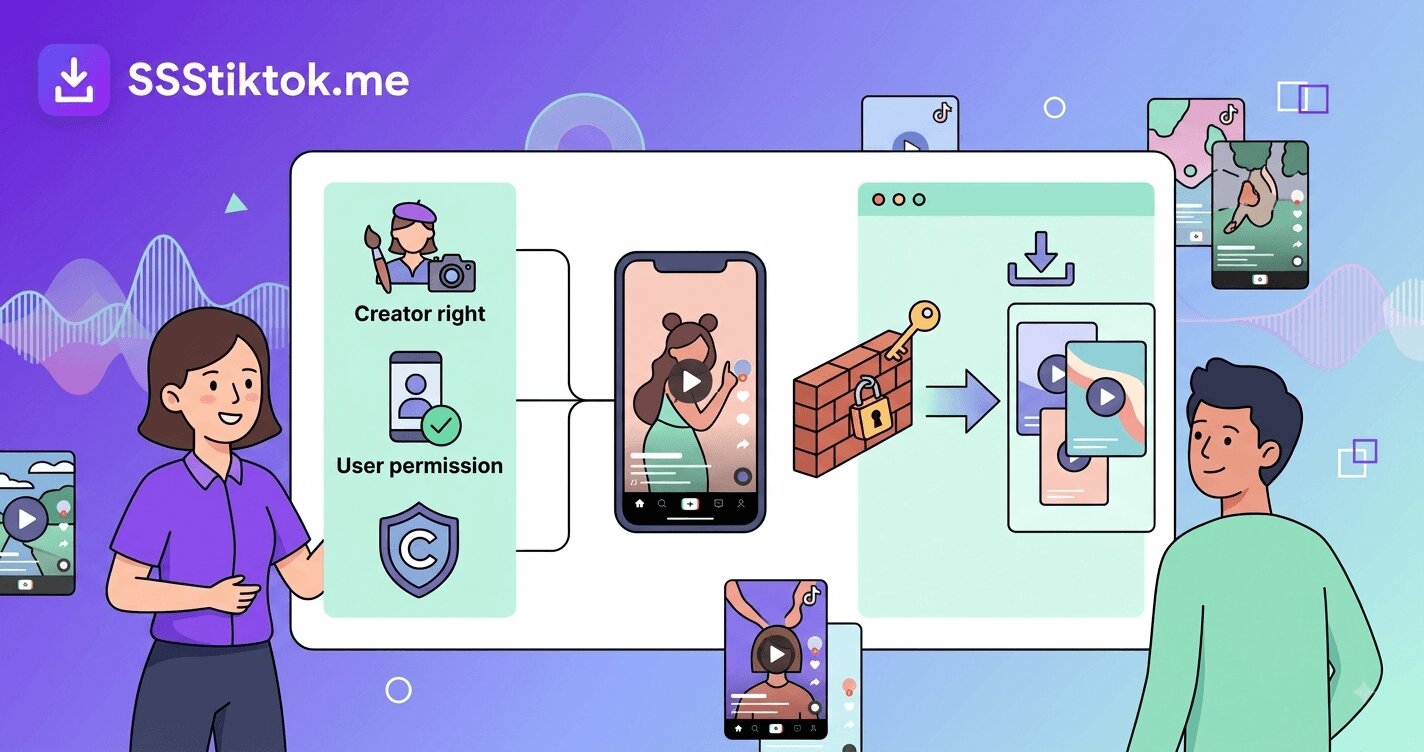 Type this question into any search engine and you will find two kinds of answers: scary ones written to keep you clicking, and dismissive ones that skip over the rules entirely. Neither helps you decide what to do with a video. So here is a plain-English version of what copyright and TikTok's own rules mean for downloading videos: what is clearly fine, what needs permission, and what is clearly not okay.
One disclaimer before we start: this is a general explainer, not legal advice. Laws differ between countries, and if you have a genuinely commercial question, a lawyer beats a blog post every time.
The short answer
Downloading your own TikTok videos is clearly fine. For anyone else's video, the creator's permission is what makes it fine. What you do with a file matters most: re-publishing, selling, or monetizing someone else's video without a license is copyright infringement almost everywhere.
Everything below unpacks that.
Who owns a TikTok video?
The creator does. Uploading to TikTok does not transfer copyright: the creator grants TikTok a license to host and distribute the video, but ownership stays with them. This means three parties have a stake in any video:
- The creator, who owns the footage itself.
- The music rights holder, if the video uses a commercial song. Labels license music to TikTok for use inside TikTok, and that license does not follow the video out of the app.
- TikTok, whose terms of service govern how you use the platform.
What TikTok's terms mean for you
TikTok's Terms of Service set the rules for using content on the platform, and they are worth reading yourself rather than relying on anyone's summary, including ours. Two points matter most in practice:
- You keep ownership of what you upload. Saving clean copies of your own videos, Stories and sounds is yours to do, and it is the main reason creators use a downloader.
- For other people's videos, use the options TikTok and the creator give you. TikTok's built-in Save button works when the creator leaves downloads switched on; outside of that, ask the creator. A creator who has turned downloads off has told you their answer.
The spectrum: from clearly fine to clearly not okay
Clearly fine:
- Downloading your own videos: you are the copyright holder. This is the strongest use case, and how many creators back up their content without the watermark.
- Saving videos where the creator explicitly allows it (downloads enabled, or a stated permission).
Needs care:
- Saving someone else's public video for private viewing. Laws differ by country (some have private-copy exceptions, many do not), and TikTok's terms have their own rules. Asking the creator removes the question.
- Reposting with credit but without asking. Common creator culture, still infringement if the owner objects. Asking first costs one comment.
- Using clips under fair use / fair dealing for commentary, criticism, news or education. Real doctrine, but narrower than the internet believes: transformation matters, wholesale re-uploading does not qualify.
Clearly not okay:
- Re-uploading someone's video as your own content. This is freebooting, and it can get your account struck or sued.
- Monetizing downloaded videos: compilations, ads, paid placements, courses. Commercial use without a license is the line that gets people into real legal trouble.
- Using downloaded commercial music outside TikTok in monetized or client work: the song license does not travel with the file. More on that in our MP3 download guide.
- Downloading private or restricted content you were not meant to access.
What about the watermark?
People sometimes assume removing the watermark is itself illegal. The watermark is not a legal seal; it is branding TikTok stamps onto exported copies (see our full explainer on why it exists). A clean file is what creators want when they back up or cross-post their own work. For someone else's video, the watermark changes nothing: ownership and permission still decide what you may do. And stripping the watermark to pass someone's work off as yours makes an infringement case look worse, because it shows intent to hide the source.
Practical rules of thumb
- Your own content: download freely. It is yours, and keeping backups is just sensible.
- Someone else's video: ask first. Most creators are happy to say yes to a visible credit.
- Reposting: get permission, credit the creator visibly, and take it down if they object.
- Monetizing: get permission in writing, or do not do it.
- Music: remember song rights are separate from video rights.
How SSSTikTok fits in
We built SSSTikTok for the clearly-fine end of this spectrum: creators backing up and cross-posting their own videos, and people saving content they have permission to use. That shapes how the tool works:
- Public links only. Private videos and private accounts are not supported.
- No copies kept. Files pass through to your device; temporary files are deleted within minutes, and nothing is republished.
- Rights holders come first. If you own a work and want it dealt with, our contact page explains how to send a copyright notice, and we act on valid notices promptly.
FAQ
Q: Can I get in trouble for downloading a TikTok video?
Not for your own videos. For other people's videos, the risk grows with what you do: republishing or monetizing without permission is where takedowns, account strikes and legal claims come from. When in doubt, ask the creator.
Q: Is downloading TikTok videos a crime?
Downloading your own video is not. Using someone else's video without permission can be copyright infringement, which can lead to takedowns, account penalties or civil claims, and is treated most seriously when money is involved. Laws differ by country, so check your local rules for anything beyond your own content.
Q: Is it legal to download my own TikTok videos?
Yes, unambiguously. You own the copyright to your videos, and downloading clean copies is the standard way creators keep backups of their work.
Q: Can I repost a downloaded TikTok on Instagram or YouTube?
Reposting someone else's video without permission is copyright infringement, even with credit. Ask the creator first; most say yes to a visible credit. Reposting your own videos is of course fine.
Q: Does removing the watermark make it illegal?
No. The watermark has no legal force: what matters is who owns the video and whether you have permission for how you use it. For your own content, a clean file is simply the better copy.
Bottom line: download your own videos freely, ask before using anyone else's, be generous with credit, and never monetize what you do not own. If you want a clean copy of your own video, the SSSTikTok downloader takes a link and gives you the watermark-free file in seconds.